Key takeaways
- Choose packaging from the food first: hot or cold, dry, saucy or oily, eaten on the go or at home.
- Delivery needs vents for steam, board that survives stacking and lids that do not leak.
- A matching set of box, wrap and bag in one or two brand colours looks strongest.
- Keep costs down with standard sizes, one or two print colours and larger runs of best sellers.
Your packaging is now part of the meal
For many restaurants, more food leaves in a bag than is eaten at a table. That changes what packaging is for. It is no longer just a container. It is the first thing a delivery customer sees, it sits on their table next to their phone, and it often ends up in a photo.
Plain white boxes do the job, but they are forgettable. Branded packaging turns every order into a small advert for the next one, and it makes your food look like it came from somewhere worth ordering from again.
Food safety is not optional
Anything that touches food has to be made from food-grade materials and printed with food-safe inks. In the USA, paper and board in contact with food fall under FDA food contact rules. In the UK and EU the reference is regulation EC 1935/2004.
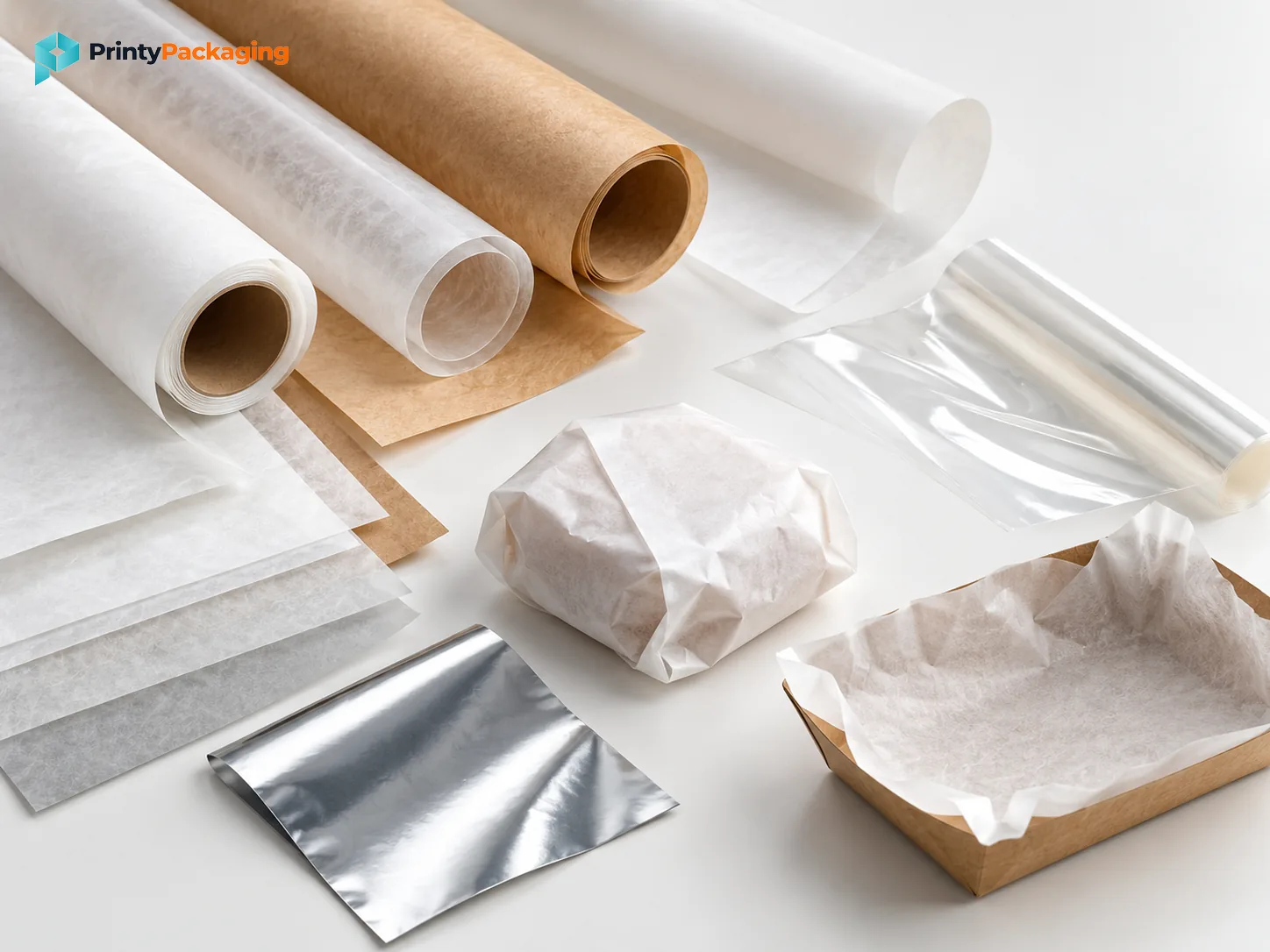
In practice this means two things. First, ask your supplier to confirm in writing that the board and inks are suitable for food contact. Second, keep heavy printing on the outside of boxes, and use a wrap or liner between very oily food and the box.
For hot, greasy food, a PE (polyethylene) or water-based coating on the inside of the board stops grease from soaking through and weakening the box. Ask which coating is used, as some cities and customers now prefer plastic-free options.
Build a set, not a single box
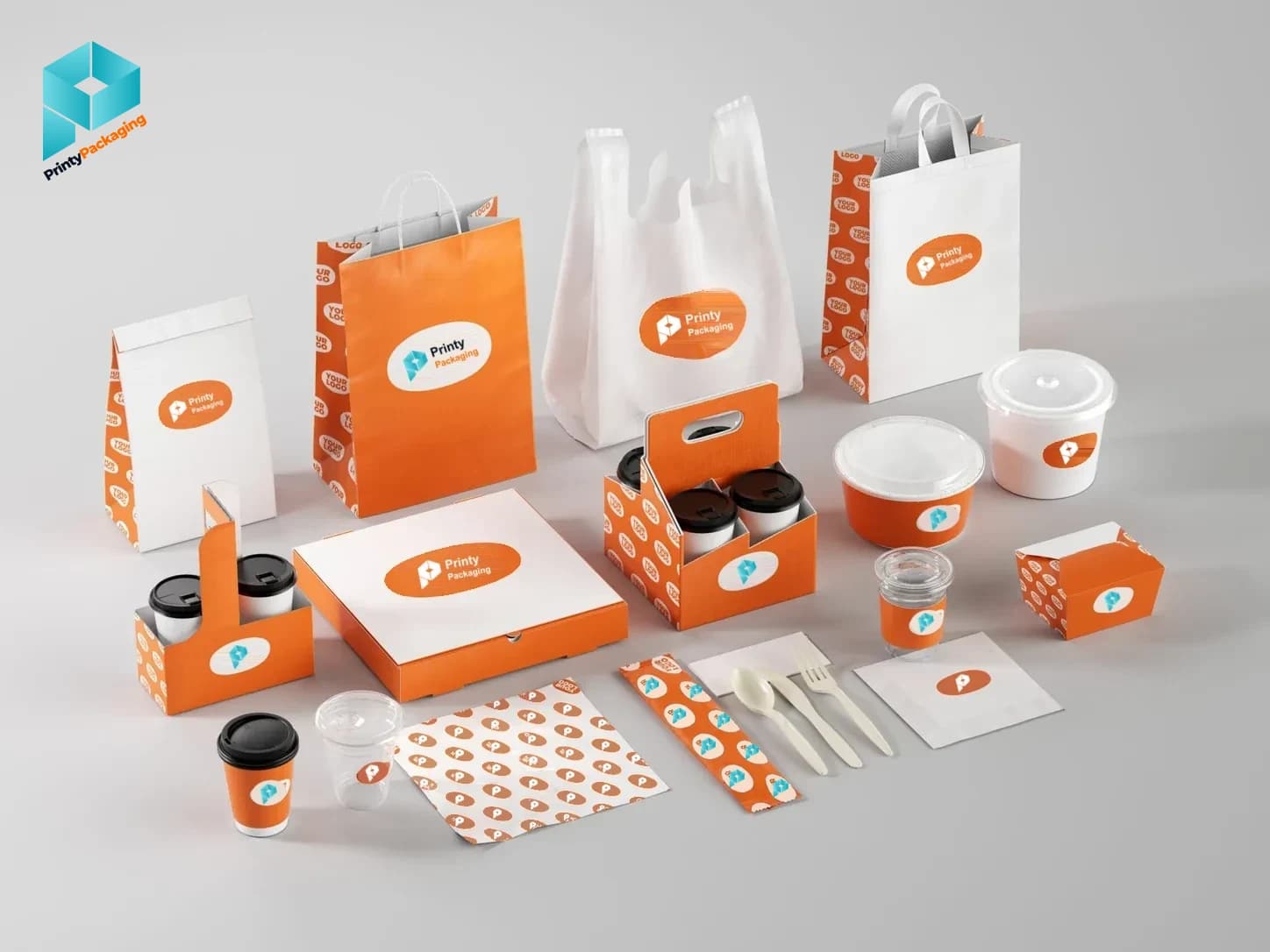
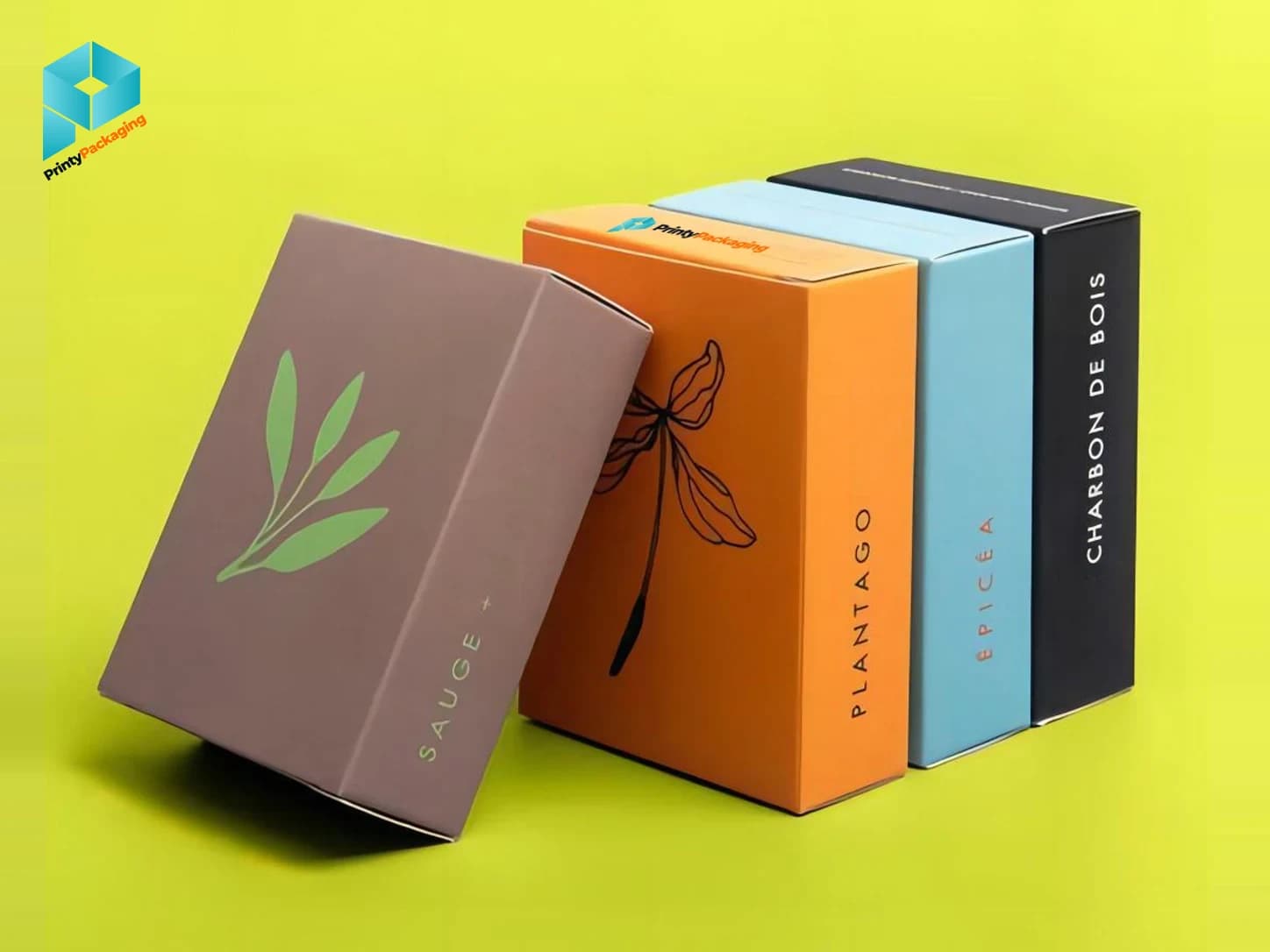
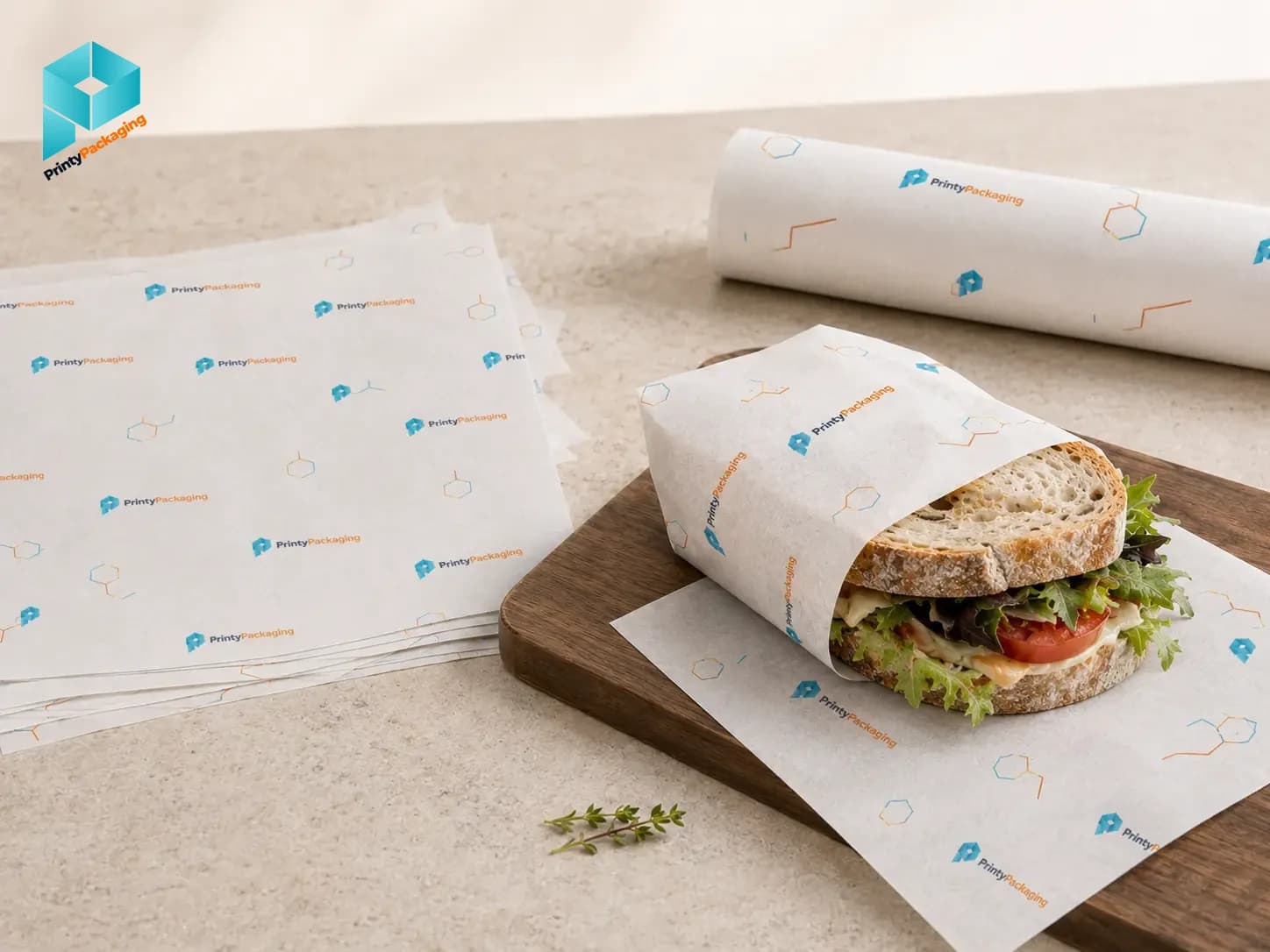
The strongest food brands look the same across every item: the box, the wrap, the bag and the cup. It does not have to be expensive. A simple system works well:
One or two brand colours used everywhere.
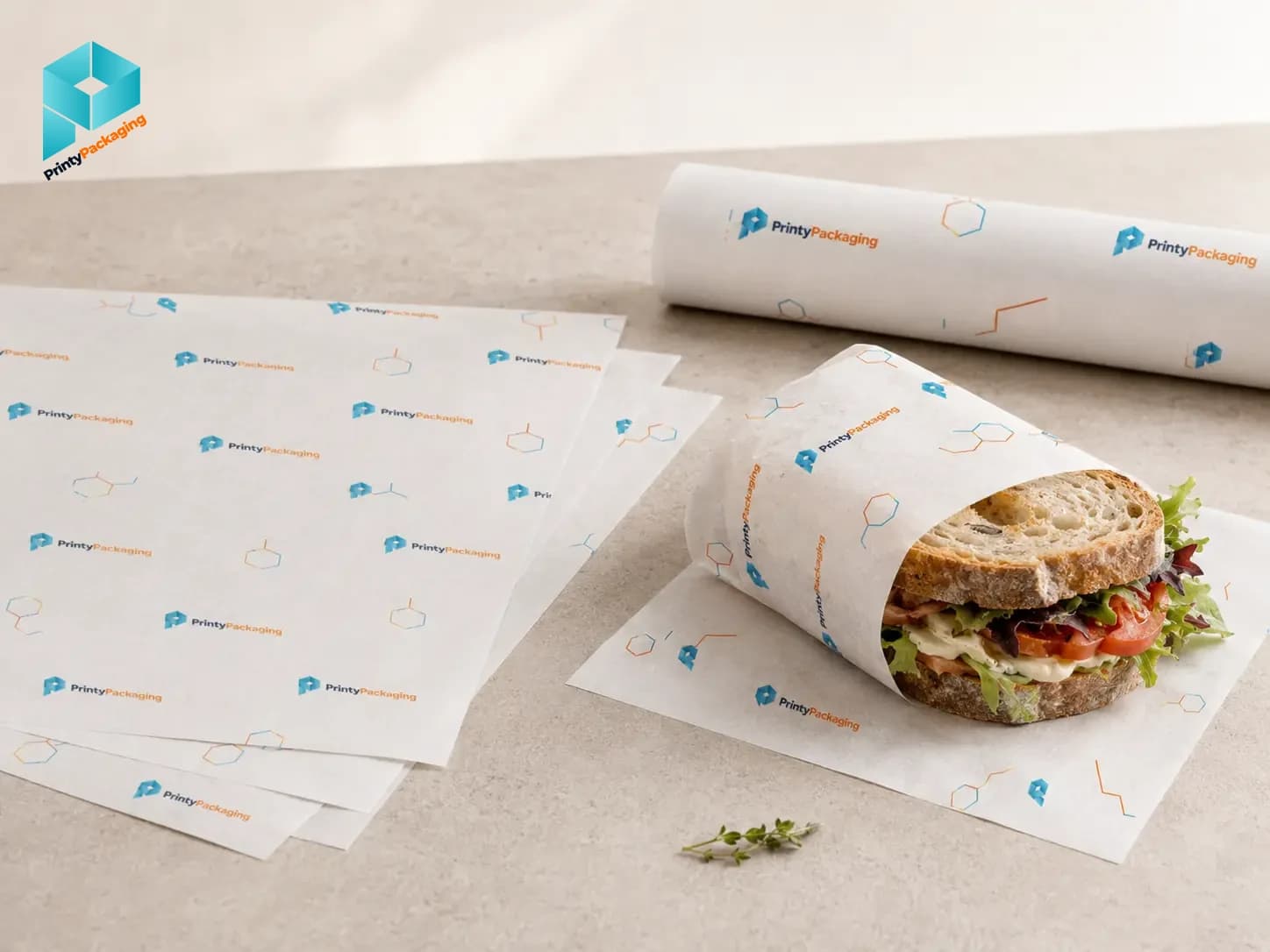
A repeating logo pattern for wraps and bags (cheaper than full artwork).
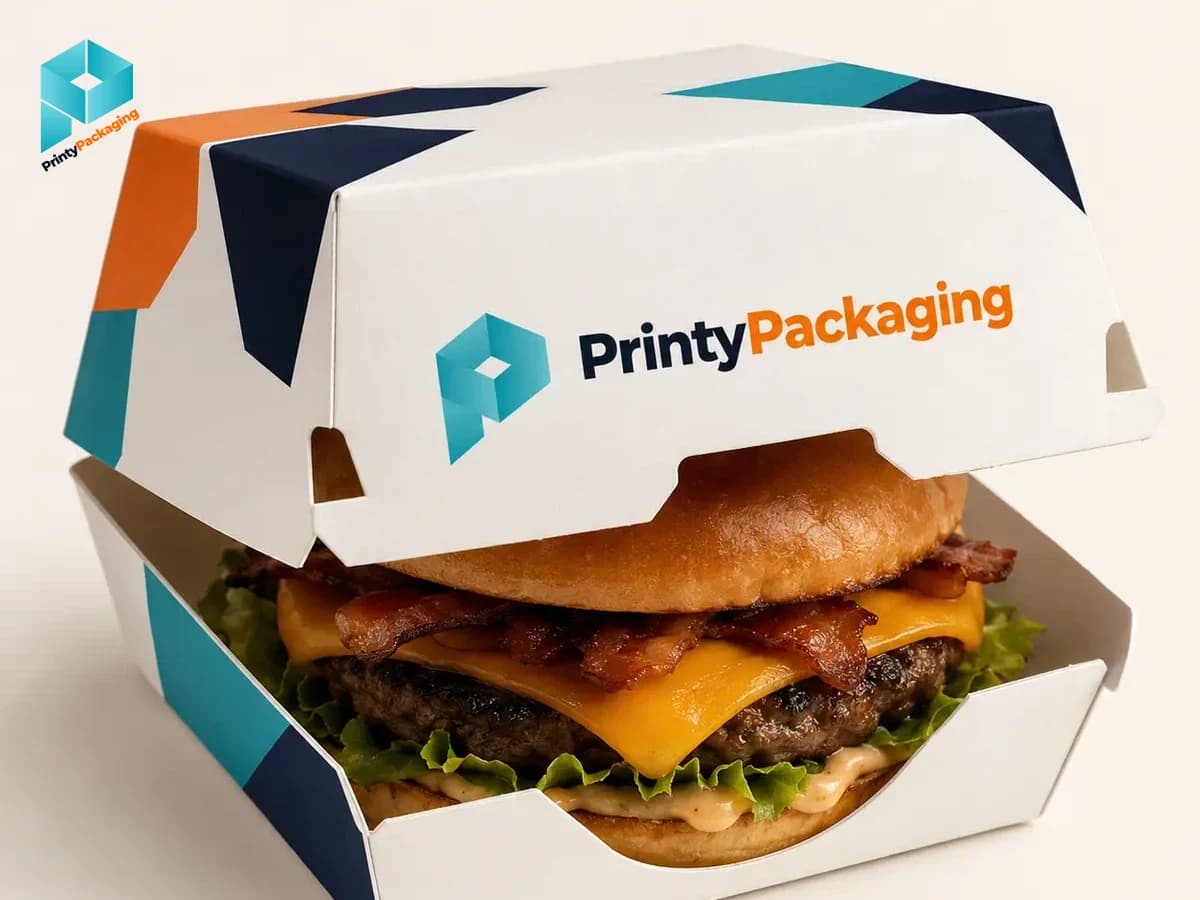
A larger logo on the lid of the main box, where it is seen and photographed.
A short line or QR code that sends people to your menu or reviews.
Start with the item you sell most, usually the main box or wrap, and add the rest as orders grow.
Delivery tests packaging harder than your counter
A box that is fine for walking to a table can fail after twenty minutes in a delivery bag. A few checks before you order in bulk:
Steam. Hot food creates condensation. Vents or a slightly looser lid stop fries and buns going soggy.
Stacking. Riders stack orders. Corrugated board and flat lids survive this much better than thin folding carton.
Leaks. Sauces need their own pots, and wet dishes need a bowl with a snug lid.
Closing. A tuck lock or a branded sticker keeps the box closed and shows it has not been opened.
Keeping the cost under control
Food packaging is used once and thrown away, so price per unit matters more than for almost any other packaging. Ways to keep it sensible:
Order the most-used sizes in larger quantities. Price per piece drops a lot as quantity rises.
Use one or two print colours. Full colour is rarely needed for food boxes.
Choose standard sizes where you can. Custom sizes are possible, but standard dies are cheaper.
Skip lamination on items that are thrown away within an hour. A clean one-colour print looks professional without it.
Products in this guide